
buying guide · 10 min read
Buying an Alveo Commercial Lot: The 2026 Investor Guide
Published 8/14/2026 · By Heinrich Picar
Alveo Land carries five live commercial-lot offerings and almost no editorial coverage anywhere explaining how to actually buy one. That gap exists because a commercial lot is a business purchase wearing a real estate costume. The questions are different, the financing is different, the tax treatment is different, and the legal protections you are used to as a condo buyer are mostly absent. This is the guide I give clients before they reserve.
What is actually on the table
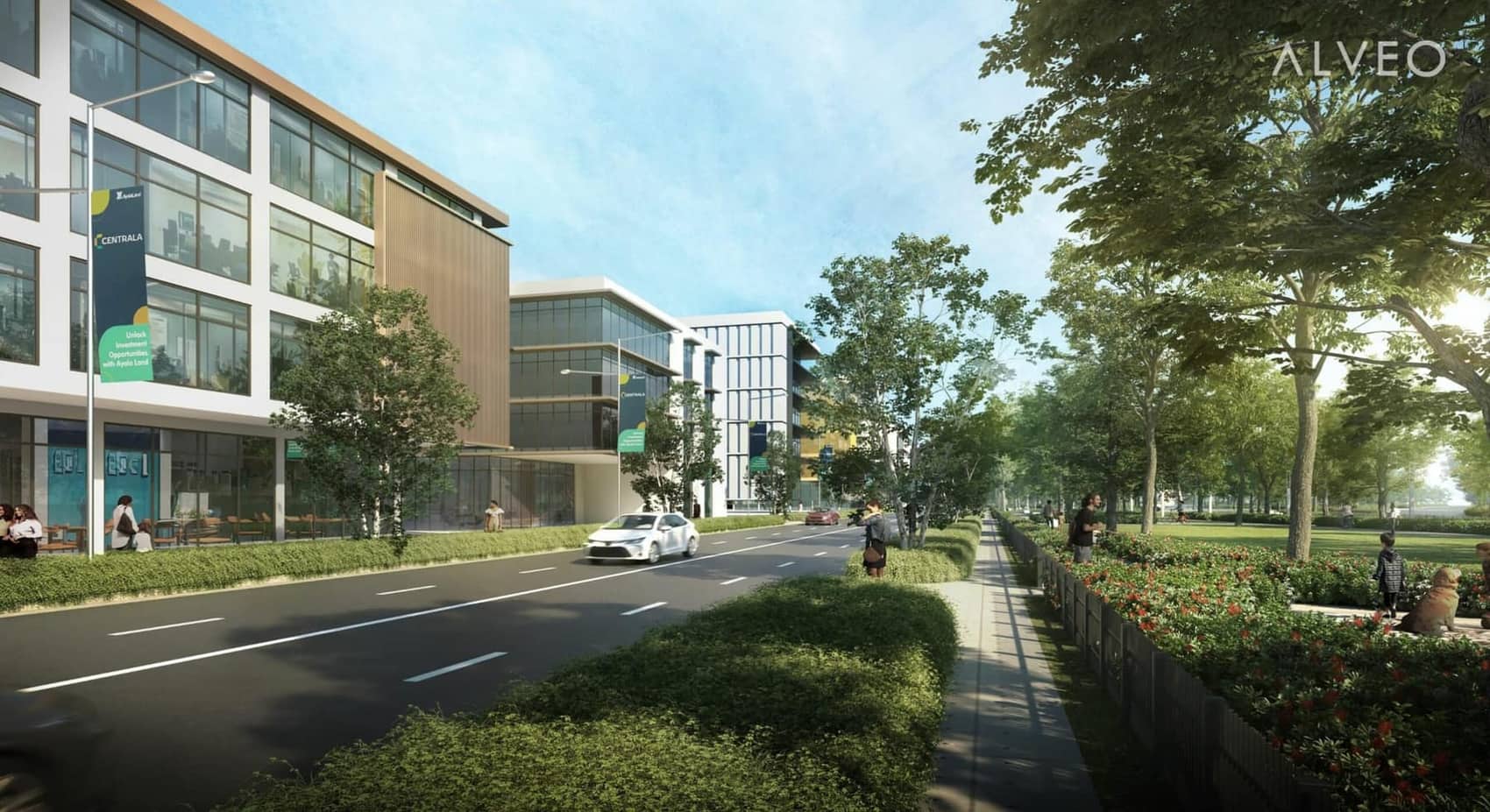
Five active commercial-lot projects sit in the catalogue, plus Westborough in Cavite which is sold out at the developer. All five are inside master-planned Ayala Land estates rather than on open highway frontage, and that distinction drives most of what follows. The full set is at commercial lots.
| Project | Location | Estate | Published price band |
|---|---|---|---|
| Broadfield | Biñan, Laguna | Innovation District of the South, minutes from CALAX and SLEX | Quoted per lot |
| Centrala | Angeles, Pampanga | 35-hectare master-planned estate, plug-and-play provisions | Quoted per lot |
| Evo City | Kawit, Cavite | Coastal mixed-use estate across North, South and West districts | ₱98.2M to ₱178.8M |
| Evo City Commercial | Kawit, Cavite | Cavitex-fronted mixed-use estate | Quoted per lot |
| Hillside Ridge Village Center | Silang, Cavite | Neighbourhood centre inside the Hillside Ridge gated estate | Quoted per lot |
One honest note on pricing. Only Evo City carries a published price band on its project page, at ₱98.2M to ₱178.8M. The other four are quoted per lot because commercial pricing moves with lot area, frontage, corner position and district, so a single band would be misleading. If you see a confident peso figure for Broadfield or Centrala on some aggregator site, treat it as invented until someone shows you the quotation.
That spread also tells you these are not one product. Hillside Ridge Village Center is a neighbourhood centre serving a gated community, sized for a cafe, a mini-mart, a clinic or a laundry. Evo City is a coastal estate parcel at a scale that suits a developed commercial building, a hotel operator or a fuel-and-retail node. Do not shop them against each other.
Permitted uses and estate design controls
This is the part most first-time commercial buyers skip and later regret. Inside an Ayala Land estate you are not buying land, you are buying land plus a covenant. The deed restrictions and estate design guidelines will typically govern permitted and prohibited uses, setbacks, floor area and height limits, parking provision, signage design and placement, facade materials, service and garbage access, and construction hours. Plans go through an architectural review before the estate releases a construction permit, and a construction bond is usually posted and refunded on compliance.
Request three documents before you reserve, in writing: the deed of restrictions, the estate design guidelines for your specific district, and the schedule of association dues and construction charges. Then hand all three to your architect before you commit to a concept. I have watched a buyer design a two-storey drive-through around a corner lot only to find the district guidelines did not permit a drive-through queue on that frontage. That is a design fee and three months, gone.
The build-out obligation
Most estate-controlled commercial land carries a construction commitment: you are expected to build within a defined window rather than land-bank indefinitely, because an empty lot in the middle of a maturing district drags on everyone else's value. The exact window and the consequence of missing it are project-specific and contractual, so ask for the clause and read it before reservation rather than at contract signing. If your plan is genuinely to hold raw land for a decade, say so out loud at the start, because that plan and an estate commercial lot may simply not fit each other.
Financing when Pag-IBIG is not an option
Pag-IBIG housing loans are restricted to residential purposes: a residential lot, a house and lot, a condominium unit, or construction of a residential unit. A commercial lot does not qualify, and no amount of MP2 savings changes that. So the ₱10M Pag-IBIG ceiling that anchors most Philippine property planning is simply not in play here.
That leaves three routes. First, the developer's own term plan, which is the simplest and usually the shortest. Second, a bank commercial real estate or term loan, where you should expect a lower loan-to-value and a shorter tenor than a residential housing loan of the same size. Third, a business loan secured by the lot, which is often how an operating company funds its own site. In routes two and three the bank underwrites your business, not just the land: financial statements, income tax returns, bank flows, and for a build-and-lease plan, the feasibility study and any pre-lease commitments. Start assembling that file before you reserve, not after, because on a lot in the Evo City band the credit process is the long pole.
The tax picture is different, in ways that matter
On a lot at the bottom of the published Evo City band, 12 percent of ₱98.2M is roughly ₱11.8M. So the first question on any quotation is whether the figure you were given is VAT-inclusive or VAT-exclusive. Ask it in writing. If you are VAT-registered and the lot goes into your trade or business, that input VAT is generally creditable against your output VAT, which changes the real cost meaningfully, but confirm the treatment with your accountant before you build a cash plan on it.
Annual carrying cost differs too. Under the Local Government Code the maximum assessment level for land is 20 percent for residential and 50 percent for commercial, with the actual level set by local ordinance. Same market value, materially different real property tax every year. Several local governments also levy an additional tax on idle land on top of basic RPT, which is worth checking in the specific LGU if your plan involves holding raw.
The exit is different as well. The flat 6 percent capital gains tax applies to capital assets. Property used in your trade or business is an ordinary asset and is taxed under the regular income tax rules with creditable withholding at source instead. Which bucket your lot falls into on the day you sell depends on how you actually used it, so plan the exit tax at entry with your accountant. The residential side of all this is covered in the Philippine property tax guide.
The Maceda Law does not protect you here
Republic Act 6552 is the installment-buyer protection that gives residential buyers grace periods, the right to assign, and a cash surrender value on cancellation. It is written for residential real estate; commercial and industrial property sits outside it. Read the default, grace and cancellation clauses of your own contract closely, because the statutory backstop you may be relying on from a condo purchase is not behind you on this one.
Raw land appreciation against a built asset
Two strategies, and they are not variations of the same thing.
| Hold the lot raw | Build and lease | |
|---|---|---|
| Cash in | Land price, VAT, transfer costs | Land plus construction, fit-out, permits |
| Annual carry | RPT at commercial assessment, association dues, possible idle-land tax | The same, plus opex, insurance, management |
| Income while held | None | Rent, once tenanted |
| Return driver | Land value as the estate builds out | Rent yield plus land value |
| Time to first peso in | On exit only | Construction period plus lease-up |
| Main risk | Carry cost with no offset, plus the build-out clause | Vacancy, cost overrun, tenant quality |
The honest framing is that raw holding in an estate commercial lot is the weaker of the two, because you pay commercial-rate carrying costs while earning nothing and you are working against a build-out obligation. Estate commercial land rewards operators and developers, not land-bankers. If pure appreciation with low carry is what you want, a residential lot in the same estate is the better instrument, and we compare yield mechanics in the investor guide.
Why estate land behaves differently from roadside land
Roadside commercial land on a national highway is cheaper per square metre and comes with no design controls at all. What you are also buying is uncertainty: your neighbour can put up anything, road widening can take your frontage, drainage and power are whatever the barangay has, and there is no one with a balance sheet obliged to finish the district around you.
Inside an estate, the restrictions that constrain you constrain your neighbours identically. That is the entire product. Underground utilities, maintained road network, drainage designed to a standard, estate security, controlled signage, and a developer still building out adjacent phases and pulling in the residential population that becomes your customer base. Broadfield sits near CALAX and SLEX in a growth corridor, Centrala is a 35-hectare master-planned district in Angeles, and Hillside Ridge Village Center serves a captive gated community. You pay for that in price per square metre, in dues, and in giving up the freedom to build whatever you like. Whether it is worth it depends entirely on whether your business benefits from predictable neighbours. A clinic or a specialty cafe does. A hardware depot or a truck yard usually does not.
What to do next
Tell me the use case first and the budget second. Permitted use is the binding constraint on a commercial lot, and there is no point pricing a parcel your concept cannot legally occupy. Send me the intended business, your rough floor area, whether you are building or holding, and your funding route, and I will come back with the districts that permit it and a per-lot quotation with the VAT treatment stated on its face.
Buyer case studies
From real buyers
Names and identifying details changed at buyer request.
Anonymised and typical: a clinic operator sizing a village-centre lot
A husband-and-wife medical practice running two leased clinics wanted to own their third site rather than rent it. They came in asking only about price per square metre. We started with permitted use instead, because a clinic needs specific provisions: patient parking, a service entrance for medical waste, generator space, and signage that an estate design guideline may restrict in size and placement. We requested the deed of restrictions and the district design guidelines before any reservation, and their architect confirmed the concept fit within setback and height limits. Financing came from a bank term loan against their practice, not a housing loan, and the credit file took longer than the site search did. The lesson they took away was ordering: use, then covenant, then price. Reversing that order is how buyers end up owning land their business cannot legally occupy.
Anonymised and typical: an investor who wanted to hold raw, and did the arithmetic
A returning overseas professional with liquidity from a completed contract wanted to park capital in a commercial parcel and sell it in ten years. Plausible on the surface. We laid out the carry: real property tax at a commercial assessment level rather than a residential one, estate association dues running for the whole holding period, the possibility of an idle-land levy depending on the local government, and a build-out clause in the contract that did not sit comfortably with a decade of doing nothing. Against that, a residential lot inside the same estate carries lower assessment, no construction commitment of that kind, and a resale market of end-users rather than operators. He bought the residential lot. Commercial parcels in an estate reward people who build. If your plan has no building in it, the plan is fighting the product.
Frequently asked questions
People also ask
- Can I use a Pag-IBIG loan to buy a commercial lot?
- No. The Pag-IBIG housing loan is limited to residential purposes: a residential lot, a house and lot, a condominium unit, or the construction or completion of a residential unit. Commercial land falls outside the programme entirely, so the ₱10M ceiling raised in May 2026 does not apply. Your realistic routes are the developer's own term plan, a bank commercial real estate or term loan, or a business loan secured by the lot.
- Is VAT charged on a commercial lot purchase?
- Expect it. The VAT exemption for residential house and lot sales at ₱3.6M and below does not extend to commercial real property sold in the course of trade or business, which is subject to 12 percent VAT. Always confirm in writing whether a quoted figure is VAT-inclusive or VAT-exclusive; on a ₱98.2M lot the 12 percent is roughly ₱11.8M. If you are VAT-registered and the lot enters your trade or business, that input VAT is generally creditable, but have your accountant confirm the treatment first.
- Do I have to build within a set period, or can I land-bank?
- Assume a construction commitment applies and verify the exact clause before you reserve. Estate-controlled commercial land normally carries a build-out obligation because vacant lots inside a maturing district depress everyone's value. The window and the consequence of missing it are contractual and project-specific, so ask for the clause in writing rather than relying on what you were told verbally at the showroom.
- Does the Maceda Law protect me on a commercial lot?
- No, and this surprises people who bought a condo first. Republic Act 6552 is written for buyers of residential real estate on installment. It gives grace periods, the right to sell or assign rights by notarial act, and a cash surrender value on cancellation. Commercial and industrial property sits outside its coverage, so your only protections are the ones written into your own contract. Have counsel read the default and cancellation clauses before signing.
- Which of the five suits a small business rather than a developer?
- Hillside Ridge Village Center is the neighbourhood-scale one: commercial lots inside a gated residential estate in Silang, sized for retail and service operators such as a cafe, mini-mart, clinic or laundry serving residents and Tagaytay-bound pass-through traffic. Centrala and Broadfield are district-scale estates, and Evo City parcels at the published ₱98.2M to ₱178.8M band are a developer or operator product. Match the parcel to the concept before you look at any price.
Inquire about this property
Have a specific project or unit in mind? Send a message and I'll prepare a sample computation tailored to it.
Contact →