
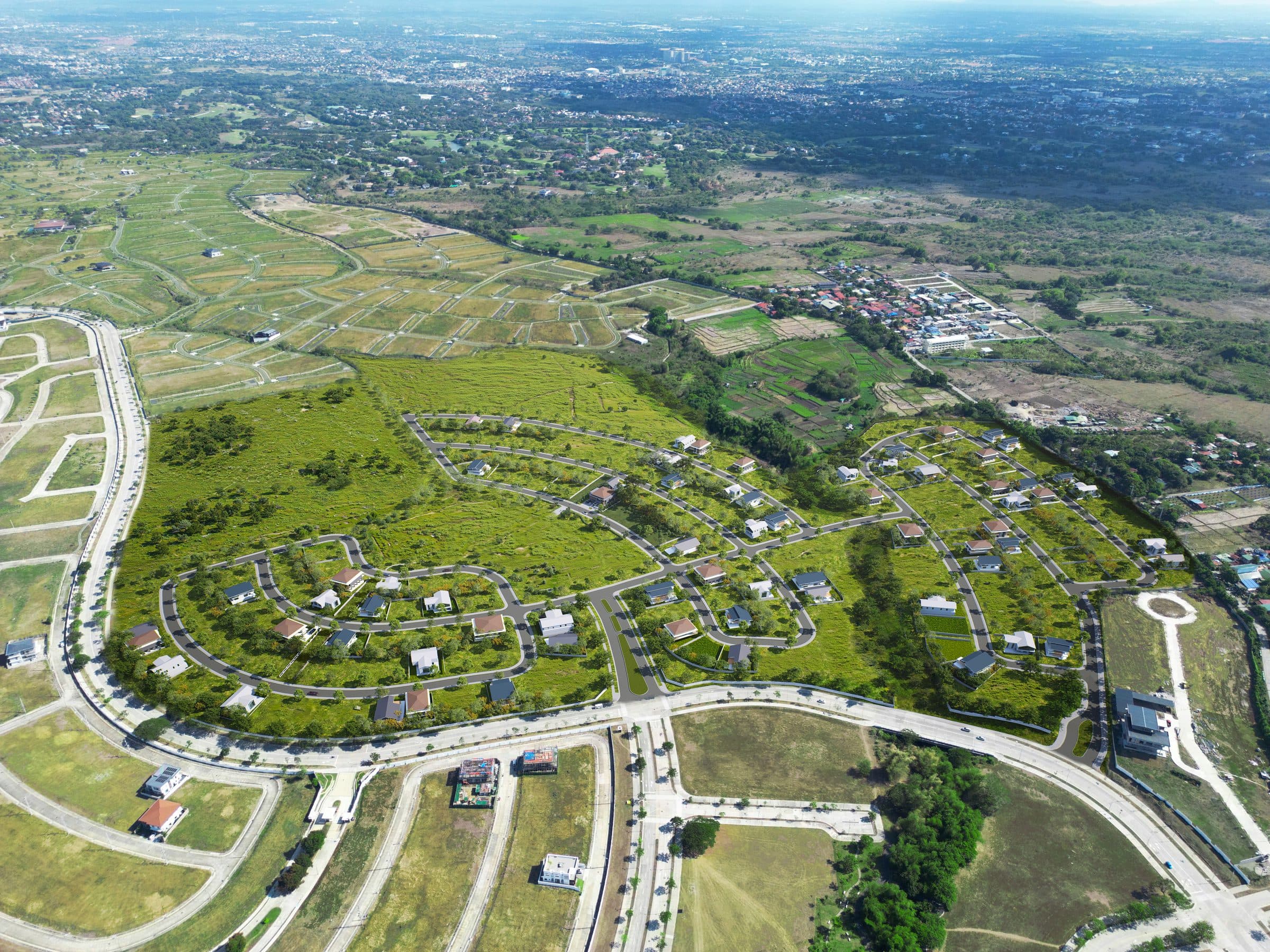
buying guide · 9 min read
Building on an ALP Lot: Restrictions and Permits
Published 8/14/2026 · By Heinrich Picar
The lot transaction itself ends cleanly. Reservation, contract to sell, payment schedule, then a title with your name on it. What follows is a gap, sometimes years long, before anything gets built. Almost every Ayala Land Premier lot buyer I have worked with hits the same wall at the start of that gap, and it is not a money problem. It is a documents and sequence problem.
Nobody publishes a plain-language page about it. The developer treats the deed of restrictions as a post-sale document, and the listing portals never see it at all. So here it is, before you reserve rather than after.
A deed of restrictions is not the house rules
The deed of restrictions, usually shortened to DOR, is a restrictive covenant governing how the land may be used and built on. Three things about it matter more than its contents.
It is annotated on your title. This is not a leaflet handed out at turnover, it is a legal encumbrance recorded against the property itself.
It runs with the land. It binds you, the person you sell to, and the person they sell to after that. You cannot negotiate it away at the counter, and a future buyer cannot decide to ignore it.
It is enforced. The homeowners association, operating under the Magna Carta for Homeowners and Homeowners' Associations (Republic Act 9904), enforces it, and Philippine courts have upheld village deeds of restrictions in litigation more than once.
One more thing to internalise early: a DOR is village specific and phase specific. Two Ayala Land Premier villages twenty minutes apart can differ on height, on fencing, on materials and on how long you have to build. The document governing Phase 1 of a village is not automatically the document governing Phase 3.
What it actually governs
| Category | What it typically constrains | Why it bites |
|---|---|---|
| Permitted use | Single-family residential only, no commercial activity | Ends the plan to run a business from the address |
| Building type | Single-detached in most ALP villages, no duplex or multi-family | Rules out two dwellings for two generations |
| Setbacks | Minimum distance from front, side and rear property lines | Shrinks the buildable footprint before you draw anything |
| Height and storeys | A ceiling on total height and number of floors | The roof deck is the most common casualty |
| Fences and walls | Height, materials, and how open the street frontage must be | The most frequent late-stage surprise |
| Exterior materials and finishes | Some villages specify or exclude finishes and colours | Can move the facade budget substantially |
| Tree preservation | Existing trees may not be removed without approval | Matters most in villages planted under mature trees |
| Minimum construction standard | A floor on the dwelling to be built | Constrains a deliberately modest first house |
| Construction timeline | A window in which you must start or finish building | Covered in its own section below |
| Consolidation and subdivision | Whether lots may be combined or split | Allowed on specific lots in some villages, not in most |
| Utilities and parking | Underground service runs, minimum on-lot parking | Adds cost that never made it into the house budget |
| Maintenance | Keeping the lot presentable even while it is vacant | Applies from turnover, not from move-in |
Read that as a list of categories, not of numbers. I am not publishing specific setbacks, heights or build periods, because they differ by village and by phase, and a wrong figure copied out of an article is exactly how people end up redrawing plans they already paid for.
The village approval step nobody budgets time for
Before the government, the village. Plans go to the developer's or the association's architectural review before you may apply for a building permit. Expect to submit a site development plan, floor plans, elevations and sections, perimeter fence details, a materials and finishes schedule, and the PRC and PTR details of the professionals who signed and sealed the drawings. Expect at least one round of comments. Budget weeks, not days.
Alongside approval come the construction administration items: a construction bond or deposit, refundable on completion and presentation of your occupancy permit; work permits; contractor accreditation; and worker identification and gate passes.
The order matters more than most buyers realise. Walking into the local government with drawings the village will later make you change is how a quarter disappears.
Then the government permits
The building permit is issued by the local building official under the National Building Code of the Philippines (Presidential Decree 1096). No construction, alteration or demolition proceeds lawfully without it. During the build, the building official inspects at defined stages, typically foundation, structural framing, rough-ins for electrical, plumbing and mechanical works, and a final inspection.
At the end comes the Certificate of Occupancy. Under PD 1096 no building may lawfully be used or occupied until the building official issues it. Treat it as load-bearing rather than administrative. Without it you can run into trouble with utility connections, insurance, bank financing and any future sale, and your village construction bond will generally not be released.
Construction-period rules are real, and they are enforced
Village construction regulations typically restrict working days and hours, bar work on Sundays and holidays, define hauling routes and delivery windows, control dust, noise and debris, restrict or prohibit workers staying on site overnight, require temporary utilities to be separately metered, and require the site to be fenced or tarpaulined and kept clean. Breaches are met with fines and deductions from your bond, not with warnings.
Ask for the association's construction rules and regulations at the same time you ask for the deed of restrictions. They are two different documents, and buyers routinely request only the first.
Yes, there is usually a build obligation. No, I am not going to guess yours
Most village deeds of restrictions include a construction timeline clause. Some are framed as a period from purchase or title transfer to the start of construction, some to completion, and some as a completion window that opens once you begin. The length is not uniform across ALP villages, or even across phases within a single village, and neither is the consequence, which can range from penalty assessments to a developer repurchase right.
This is precisely the sort of figure that gets copied wrongly from blog to blog. Do not take mine and do not take a forum's. Get the clause from the deed of restrictions for the specific phase of the specific village you are reserving in, in writing, before you pay a peso.
Read it together with the turnover date, because you cannot break ground on a lot that has not been turned over yet. Crescent Grove at Vermosa, for instance, has project completion and turnover set for April 30, 2030. A build clock and a turnover date only make sense read as a pair.
Five documents to ask for before you pay the reservation fee
| Ask for | What you are checking |
|---|---|
| The deed of restrictions for your specific phase | Everything in the table above, and the construction timeline clause |
| The association's construction rules and regulations | Hours, bond, permits, penalties, contractor accreditation |
| The approved subdivision or site development plan showing your lot | Real dimensions, frontage, easements, corner status, road width |
| The association dues schedule and how dues are computed | A permanent monthly obligation that starts long before the house does |
| The turnover schedule, and what the phase turnover actually includes | Roads, drainage and utilities in place, so you know when you may start |
Any accredited seller can obtain these for you. If someone cannot, that itself is information.
Budget the things that are not the house
Design and professional fees. Permit and processing fees. The construction bond, refundable but cash out for the entire build. Utility connection and meter deposits. The perimeter fence, which the deed of restrictions may make considerably more expensive than you assumed. Site works, which on rolling terrain are not a rounding error: Enara sits between 242 and 337 metres above sea level and Lanewood Hills between 194 and 265, both on rolling ground, and rolling ground means cut and fill, retaining structures and longer service runs. Landscaping, which some villages require to a standard.
I am deliberately not publishing a peso-per-square-metre build cost. It moves with specification, contractor, site and year, and a figure written in 2026 will be quoted back at me wrongly in 2028. Get two or three contractor quotations priced against the same approved drawings. That is the only number that means anything.
One tax note while you are budgeting. Real property tax on a vacant lot is assessed on the land alone, and steps up once the house is declared as an improvement, so your annual bill changes the year you finish. The rest of the tax picture is in the taxes explainer.
If you are still deciding whether a lot is the right product at all, ALP lot versus ALP condo sets the two side by side on title, dues, financing and liquidity. If you have already decided, send me the village and phase you are looking at and I will get you the deed of restrictions and the construction rules before you commit to anything.
Buyer case studies
From real buyers
Names and identifying details changed at buyer request.
The buyer who hired the architect before reading the DOR
An anonymised and fairly typical case. A buyer reserved a lot in a Cavite village and, understandably excited, had a family architect produce a full set of drawings before anyone had read the deed of restrictions for that phase. Village architectural review sent it back on two points: a roof deck that pushed the structure past the village height ceiling, and a street-facing fence design that did not meet the frontage rules. Neither was a big design idea, but both were structural to the drawings, so it meant a redraw, a second professional fee and another review cycle. The build started a quarter later than planned. The fix costs nothing if you do it in the right order: get the DOR first, hand it to your architect as a design constraint on day one, and let the drawings be born compliant.
The view lot that came with a civil works bill
Another anonymised and typical situation. A buyer chose an elevated lot in a rolling-terrain village specifically for the view, then built the budget around the house alone. What surfaced during design was that the site itself needed work before the house could sit on it: cut and fill, retaining structures, and longer utility runs from the road to the building line. None of that was unusual for sloping ground, it simply had never been priced. They phased the project rather than compromise the house, completing the main structure first and deferring the pool and hardscape to a second stage. The general lesson for anyone looking at rolling terrain, which describes several ALP villages, is to commission a site survey and a civil works estimate before you fix the house budget, not after the architect has finished.
Frequently asked questions
People also ask
- What exactly is a deed of restrictions, and can it be negotiated?
- It is a restrictive covenant governing how the land may be used and built on, annotated on the certificate of title itself. Because it is annotated on the title it runs with the land, which means it binds every future owner and not just the first buyer. Enforcement sits with the homeowners association under Republic Act 9904, and Philippine courts have upheld village deeds of restrictions in litigation. It is not negotiable at the sales counter. Individual variances are sometimes possible through the association's architectural review process, but they are approvals to seek after you understand the rule, not a reason to assume the rule will bend for you.
- Do I need village approval before applying for the building permit?
- In practice, yes, and in that order. The village or association architectural review comes first, then the local building official issues the building permit under the National Building Code (PD 1096). Doing it the other way round is one of the most common and most expensive scheduling mistakes I see: you get a permit against drawings the village later requires you to change, and you pay for the redesign, the re-review and the delay. Confirm the exact sequence with the association handling your village before your architect starts producing final drawings.
- Is the construction bond refundable?
- Typically yes. Village construction bonds or deposits are generally refundable once the build is complete, the occupancy permit is presented, and any damage to common areas, roads or drainage caused during construction has been made good. Deductions for rule breaches during the build come out of the same bond, which is why the construction rules and regulations are worth reading before your contractor mobilises rather than after the first fine. Assume the money is out of your hands for the whole construction period and budget accordingly, because it is working capital you cannot use.
- Can I build a duplex, or rent out part of the house?
- Most Ayala Land Premier villages restrict lots to single-family residential use in single-detached form, which rules out duplexes, apartments and multi-family structures, and many go further and restrict commercial activity at the address. Whether a family arrangement such as an attached guest quarters is permitted, and on what terms, is a question for the specific deed of restrictions and for the association's architectural review, not for a general article. If a second dwelling for a second generation is part of your plan, raise it before you reserve, because it can determine which village and which lot classification actually works for you.
- How long do I have to build after buying the lot?
- There is usually a clause, and I am not going to publish a number for it. Construction timeline provisions differ across Ayala Land Premier villages and across phases of the same village, they are counted from different starting points, and the consequence of missing the window differs too. Read the clause alongside the turnover date for your phase, because the clock and the date have to make sense together: you cannot start on a lot that has not been turned over. Request the deed of restrictions for your exact phase in writing before you pay a reservation fee and read the clause yourself.
Inquire about this property
Have a specific project or unit in mind? Send a message and I'll prepare a sample computation tailored to it.
Contact →